Small Business · Scaling Up
It starts with a truck, a couple of strong backs, and a phone. Whether it stays a side hustle or grows into a real company comes down to a few decisions, including what you do with the junk.
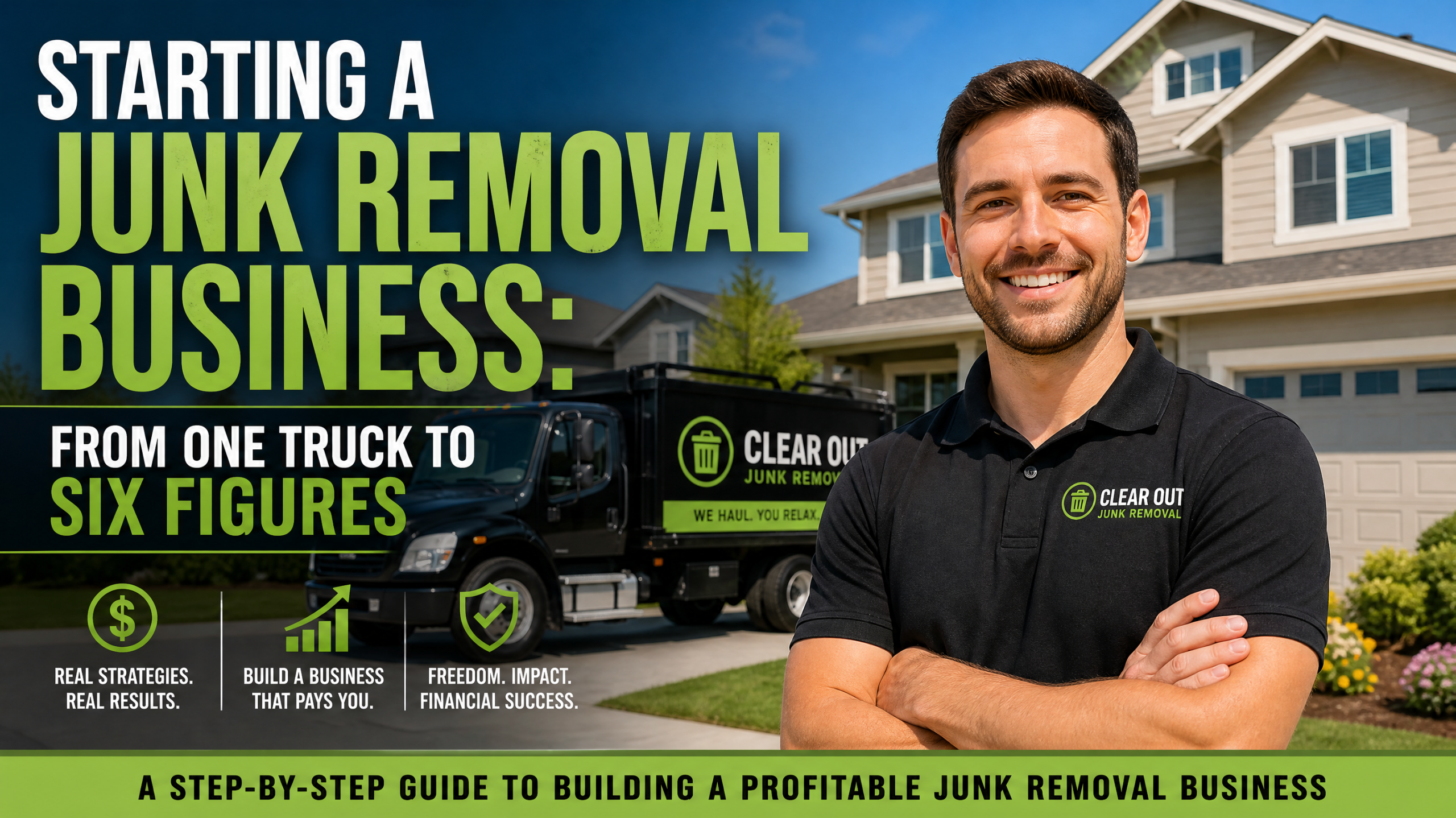
Junk removal is one of those businesses that sounds almost too simple to be lucrative: people have stuff they want gone, you haul it away, they pay you. No advanced skills, no inventory, no storefront. And yet the demand is enormous and constant, garages, basements, estate cleanouts, evictions, renovation debris, businesses clearing out, and the barrier to entry is low enough that you can genuinely start with a pickup truck or a rented dump trailer and grow from there. The story of going “from one truck to six figures” is a real pattern, not just marketing, but it’s not automatic. Plenty of people buy a truck, do a few jobs, and stall out.
The difference between a stalled side gig and a growing company comes down to treating it as a system: pricing right, managing disposal smartly (which is the hidden margin lever), getting consistent customers, and then building a team so the business runs without your back doing all the lifting. Here’s the path, stage by stage.
Why junk removal works
Three things make this business attractive. First, demand is steady and broad, everyone accumulates junk, and life events (moving, downsizing, death, divorce, renovation) constantly generate cleanout jobs regardless of the economy. Second, the startup cost is low compared to most businesses; you can begin with a vehicle you may already own. Third, it’s a cash-generating service with same-day payment and no inventory risk. You’re selling labor and disposal, not a product that can sit unsold. That combination, real demand, low barrier, immediate cash, is exactly why it shows up on every “businesses you can start cheap” list.
Stage 1: The one-truck startup
STAGE 1 — Owner-operator
You and maybe one helper, one truck or dump trailer, a phone, and a basic set of tools. Goal: prove demand, learn the economics, and build cash and reviews.
To start, you need a way to haul (a pickup with a trailer, a box truck, or a dump trailer you can rent at first), basic equipment (dollies, straps, gloves, tarps, simple tools), and the foundational business setup. Register the business and get insured, because you’re going into people’s homes and lifting heavy objects, so liability and the right coverage matter. The SBA’s 10 steps to start a business covers the registration and structure decisions, and an LLC is worth considering for the liability protection given the physical, in-home nature of the work, as the SBA’s structure guide explains.
Starting capital can be modest if you already have a vehicle, mostly going to insurance, basic gear, branding, and initial marketing. The lean-start, reinvest-profits approach works beautifully here: do jobs, bank the money, and upgrade your equipment and reach over time.
The economics: how you actually make money
Most junk removal is priced by volume, how much of the truck the job fills, sometimes by item, and occasionally by time for big cleanouts. A customer pays for “a quarter truck,” “a half truck,” a “full load,” and so on. Your costs against that revenue are mainly disposal (dump and landfill fees), fuel, your time and any labor, and the per-job wear on equipment. The job that looks like easy money can shrink fast once you subtract a hefty dump fee, so understanding disposal cost is central to pricing correctly.
This is where many beginners stumble: they quote based on what feels fair without knowing their dump fees and fuel, then discover the margin is thin. Know your costs before you quote, and price to cover disposal, fuel, labor, insurance, taxes, and profit, not just “an hour of hauling.”
The hidden margin lever: don’t just dump it
Here’s the insight that separates a thoughtful operator from someone hauling everything straight to the landfill. The landfill charges you to dump, so every item you keep out of it can save money, and some items can even make money. A smart disposal strategy sorts the load: donate usable furniture, appliances, and goods to charities (often a tax-deductible donation and good for your reputation); recycle metals, electronics, cardboard, and other materials, sometimes for scrap value; resell genuinely valuable finds; and only landfill what truly has to go.
This isn’t just feel-good environmentalism, though the EPA’s guidance on reducing and reusing makes the case that donating and reusing keeps usable goods in circulation and out of landfills. It’s also straight economics: less landfill volume means lower dump fees, donations build goodwill and marketing material (“we keep your stuff out of the landfill”), scrap metal and resold items add revenue, and an eco-friendly angle is a genuine differentiator in a crowded market. Many of the most profitable junk haulers are quietly excellent at diverting material, because every pound they don’t pay to dump is margin. Building relationships with local charities, recyclers, and scrap yards turns disposal from a pure cost into a managed mix of savings and even income.
Sort the load four ways
Donate usable goods to charity · Recycle metal, e-waste, cardboard (sometimes for cash) · Resell valuable finds · Landfill only the true waste. Every diversion lowers your dump bill.
Getting customers
Early demand comes from being findable and referable. A Google Business Profile is essential, because most people search “junk removal near me” when they need it, and showing up there with good reviews wins jobs. A simple website, before-and-after photos, and quick, friendly responses to inquiries do a lot. The highest-leverage move, though, is building referral relationships with people who repeatedly need junk gone: real estate agents (cleanouts before listing), property managers and landlords (tenant turnover and evictions), estate and downsizing services, contractors (renovation debris), and moving companies. A handful of these partnerships can feed you steady work without paying for every lead. Word of mouth is powerful too, since a friendly crew that shows up on time and cleans up after itself gets recommended.
Stage 2: Adding trucks and crews
STAGE 2 — Multi-truck operator
You hire crews to do the hauling, add a second and third truck, and shift toward dispatching, sales, and systems. The business starts running on labor that isn’t only yours.
The leap from “I haul junk” to “I run a junk removal company” happens when you stop being the only one lifting. You hire and train crews, add trucks to run more jobs simultaneously, and build the systems that let the operation function without you on every job: scheduling and dispatch, standardized pricing, job checklists, and reliable disposal routines. This is where the six-figure trajectory becomes realistic, because revenue is no longer capped by your own back and hours. It’s also where new challenges appear, hiring dependable labor, managing crews, and keeping quality consistent, which become the real work of the owner.
Some operators grow independently; others franchise into an established brand for instant recognition and systems at the cost of fees and less independence. Either way, the principle is the same: systematize the work, delegate the lifting, and spend your time on sales, partnerships, and operations.
The honest challenges
It’s physically demanding and, in the early stages, hard on your body. Disposal costs vary by area and can squeeze margins if you don’t manage them. Labor is the perennial headache at scale, finding and keeping reliable crews who show up and treat customers’ homes with care. There’s also the unglamorous risk side: lifting injuries, property damage, and the liability that makes insurance non-negotiable. And the low barrier means competition, so professionalism, responsiveness, and that eco-friendly disposal angle are how you stand out. None of this is a reason to skip the business; it’s a reason to run it deliberately.
Niches that pay more
Not all junk jobs are equal, and operators who target the right niches earn more per job and build steadier pipelines. A few worth pursuing as you grow:
Estate and downsizing cleanouts. When someone passes away or moves to assisted living, families often need an entire home emptied quickly and respectfully. These are large, full-truck jobs, and the donate/recycle/resell approach shines here because estates contain plenty of usable goods. Relationships with estate attorneys, senior-move managers, and realtors feed this work.
Foreclosure and rental turnovers. Property managers and banks need units cleared between tenants and after evictions, often on tight timelines. The work is steady and repeatable, exactly what you want, and a reliable hauler becomes the manager’s go-to.
Construction and renovation debris. Contractors generate constant debris and value a hauler who shows up on schedule. Note that some construction waste has special handling rules, so know your local requirements.
Commercial and office cleanouts. Businesses relocating, closing, or refreshing furniture produce big jobs, and commercial clients can become recurring accounts. These higher-value niches reward the professionalism, reliability, and partnerships you build as you move past random one-off residential calls.
Tools and systems that let you scale
The difference between a hauler and a company is often the back office. As you add jobs and crews, simple systems keep quality and margins from slipping: scheduling and dispatch software so crews know where to be, consistent on-site pricing so every customer is quoted fairly and profitably, digital invoicing and card payment so you get paid fast, and a CRM or even a basic spreadsheet to track your referral partners and follow up. Standardized checklists, for how to quote, how to protect a customer’s floors and walls, how to sort the load, and how to leave a space clean, turn good service into a repeatable process rather than something that depends on you personally being there. These unglamorous systems are what let an owner step back from the truck and let the business run on trained crews, which is the whole point of going from one truck to many.
Bottom line
Junk removal is a low-barrier, high-demand, cash-generating business with a genuine path from one truck to a six-figure company. Start lean and insured, price to truly cover disposal and costs, and treat smart disposal, donate, recycle, resell, landfill last, as the margin and marketing lever it is. Build referral partnerships for steady work, then hire crews and systematize so the business grows beyond your own labor. The hauling is simple; the discipline is what scales it.
Frequently asked questions
How much does it cost to start a junk removal business?
It can be modest if you already have a suitable vehicle, mainly covering insurance, basic equipment, branding, and initial marketing; you can even rent a dump trailer at first. Costs rise as you buy a dedicated truck and add crews, which many operators fund by reinvesting early profits.
How do junk removal companies price jobs?
Most price by volume, the fraction of the truck a job fills, sometimes by item or by time for large cleanouts. Pricing must cover disposal fees, fuel, labor, insurance, taxes, and profit, so knowing your dump costs before quoting is essential.
What should I do with the junk I collect?
Sort it: donate usable goods, recycle metals, electronics, and cardboard (sometimes for scrap value), resell valuable items, and landfill only what’s left. This lowers dump fees, can add revenue, builds goodwill, and gives you an eco-friendly marketing edge.
Can a junk removal business really reach six figures?
Yes, but typically only after you stop being the sole laborer. Growth comes from adding trucks and crews, building referral partnerships for steady work, and systematizing operations so revenue isn’t capped by your own hours. A single owner-operator has a real income ceiling that a managed multi-truck operation breaks through, since one person can only do so many jobs in a day no matter how hard they work.
For business setup, see the U.S. Small Business Administration’s 10 steps to start a business and choose a business structure; for disposal and diversion guidance, see the EPA’s reducing and reusing basics. Verify local disposal rules, licensing, and insurance requirements before operating.