Home Exterior & Yard
Two identical-looking trees can cost wildly different amounts to remove. Understanding why, and what’s quietly left off the quote, keeps you from overpaying or getting surprised.
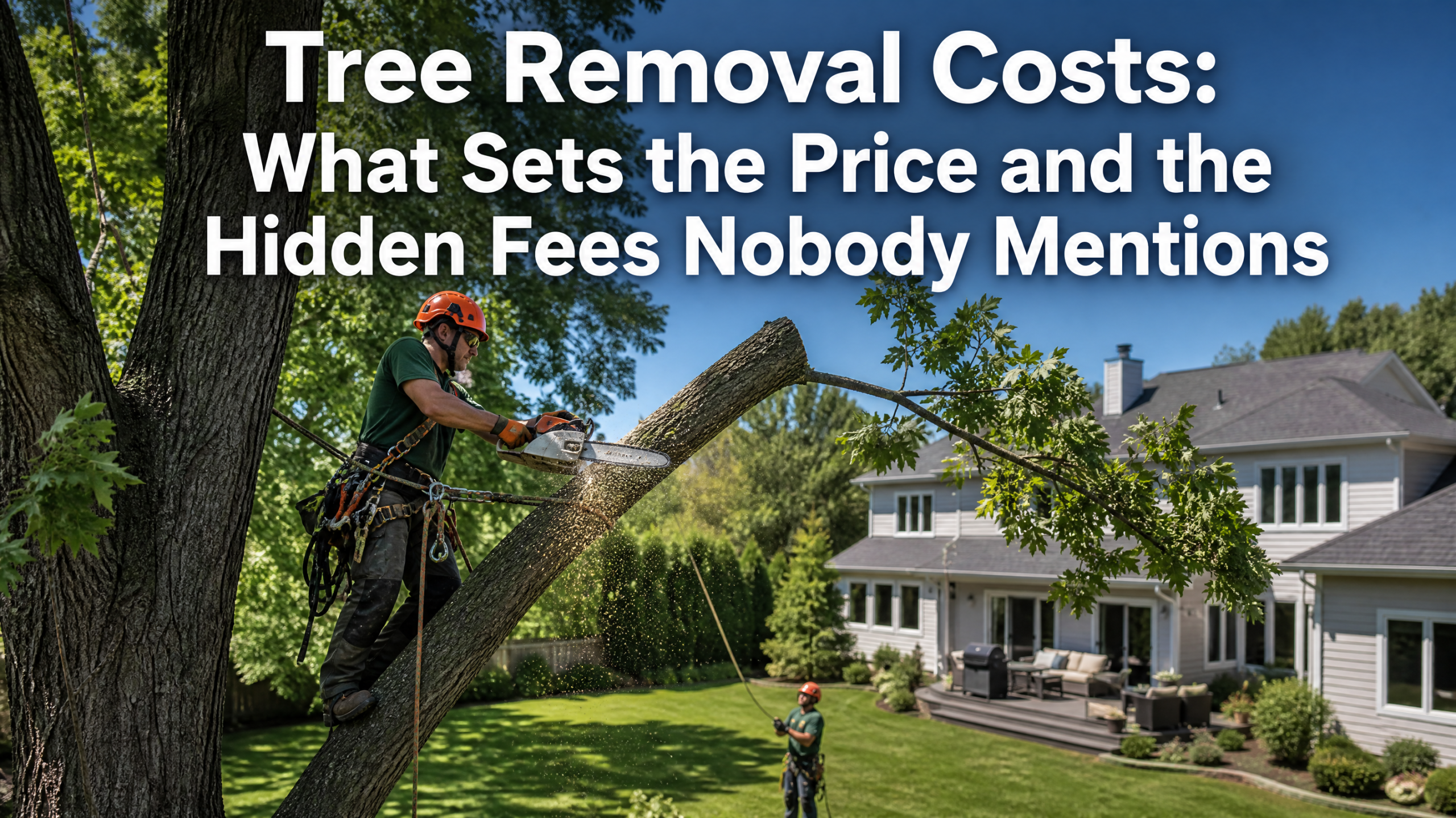
Ask three tree services to quote removing the same tree and you may get three very different numbers. That’s not necessarily because someone’s gouging you; tree removal pricing depends on a stack of factors that aren’t obvious from the ground, and the gap between a simple job and a complicated one is enormous. A small tree in an open field might cost a few hundred dollars. A large, dead, leaning tree wedged between your house and the power line can run into the thousands, and that’s before the extras that have a way of appearing after the chainsaws stop. Knowing what drives the price, and what’s commonly excluded from the headline quote, turns you from someone hoping the number is fair into someone who can tell.
Just as important as the price is who you hire. This is genuinely dangerous work performed near homes and power lines, so the cheapest quote from an uninsured outfit can become the most expensive mistake of the project. We’ll cover both: what sets the cost, and the hidden fees and risks to ask about before you sign.
The factors that set the price
1. Size, far and away the biggest factor. Height and trunk diameter drive everything. A tall tree means more material, more time, more rigging, and often climbing or a bucket truck or crane. Cost scales steeply with size; doubling the height more than doubles the difficulty. This is why an honest quote always starts with measuring the tree, not glancing at it.
2. Location and accessibility. A tree standing alone where a crew can drop it whole and feed a chipper alongside is cheap to remove. A tree tight against your house, over the roof, near the fence, or hemmed in by other trees must be taken down piece by piece, with each limb roped and lowered carefully. That “technical removal” can multiply the labor and the price several times over compared to the same tree in the open.
3. Proximity to power lines and structures. Anything near power lines raises the stakes and the cost, and may require coordinating with the utility. The risk of a falling limb hitting a house, car, or line forces slower, more skilled work. This is also where insurance stops being optional.
4. Condition of the tree. Counterintuitively, a dead or diseased tree can cost more, not less. Dead wood is unpredictable and brittle, and climbing or rigging a structurally compromised tree is more dangerous, so experienced crews charge for that risk. A healthy tree is more predictable to dismantle.
5. Species and wood. Hardwoods are heavier and denser, which means more weight to rig and haul and more wear on equipment than a soft, fast-growing species of the same size. Some trees also have sprawling, multi-trunk forms that complicate the work.
6. Number of trees and the day’s logistics. Removing several trees in one visit usually lowers the per-tree cost, since the crew and equipment are already mobilized. A single small job carries the full cost of showing up.
The short version
Price climbs with size, with how dangerously the tree is positioned, with proximity to lines and buildings, and with how compromised the wood is. A big dead tree over your roof near a power line is the perfect storm; a small healthy tree in the open is the bargain.
The hidden fees nobody volunteers
Here’s where the headline number and the final bill part ways. Several common charges are often left off the initial quote unless you ask:
| Stump removal / grinding | Very commonly separate. “Tree removal” often means the tree comes down and the stump stays. Grinding is an added charge per stump. |
| Debris / log hauling | Some quotes leave the wood chipped on site or the logs in your yard. Hauling it all away can be extra. |
| Crane or bucket truck | Tough-access trees may need a crane, a real and sometimes large add-on. |
| Permits | Some municipalities require a permit to remove certain trees, especially large or protected ones. That’s your responsibility to confirm. |
| Emergency / after-storm rates | A tree on your roof at midnight costs far more than a scheduled removal. |
The fix is simple but essential: get the quote in writing and make it spell out exactly what’s included. Does the price include stump grinding? Hauling away all wood and debris? Cleanup and raking? Filling the stump hole? A quote that says only “remove oak tree, $900” is an invitation to surprises. A good one itemizes the tree, the stump, the debris, and the cleanup so you know the real total.
Why the cheapest quote is often the most expensive
Tree work is among the more hazardous home services there is, with real risk of property damage and serious injury. That makes the contractor’s credentials part of the price you’re actually paying for. The single most important thing to verify is insurance: a reputable company carries liability insurance and workers’ compensation. If an uninsured crew drops a limb through your roof, or a worker is hurt on your property, you can end up financially responsible. An ISA-credentialed arborist signals training and adherence to industry standards; the International Society of Arboriculture maintains directories of certified professionals, and university extension guidance on how and why to hire an arborist walks through what credentials to look for.
There are other tells of a quality outfit. Reputable arborists rarely ask for full payment up front, and they don’t go door to door pressuring you after a storm. They also avoid harmful practices like “topping” a tree (cutting the crown back to stubs), which damages the tree and can make it more hazardous; an outfit that advertises topping is one to avoid, per ISA guidance on selecting an arborist. Get a few written quotes, confirm insurance, and weigh skill and professionalism alongside price rather than just chasing the lowest number.
Should you even remove it?
Worth a pause before spending anything: not every problem tree needs to come down. A certified arborist can assess whether a tree that worries you is genuinely hazardous or can be saved with pruning or cabling, which is often far cheaper than removal. Healthy, mature trees also add real value, with research finding tree canopy can contribute meaningfully to a home’s sale price, plus shade that lowers cooling costs. Removal is permanent and a big tree can’t be replaced for decades, so it’s reasonable to get a professional opinion on whether removal is truly necessary before defaulting to it. When a tree is dead, diseased beyond saving, or a genuine structural threat, removal is the right call; when it’s merely inconvenient, ask first.
Rough price tiers by size
Exact prices vary enormously by region, access, and the factors above, but it helps to have a mental map of how cost scales with size, because size is the dominant variable. Think of removals in broad tiers rather than precise figures.
Small trees (roughly up to 30 feet, like many ornamentals and young trees) are the lower tier, often a few hundred dollars in straightforward conditions, because a crew can usually take them down quickly without heavy rigging.
Medium trees (very roughly 30 to 60 feet) sit in the middle and climb meaningfully with height and access challenges, since they typically require climbing or a bucket truck and more controlled dismantling.
Large trees (60 feet and up, mature oaks, pines, and the like) are the top tier and can run well into the thousands, especially when they’re near a structure or line and must come down piece by piece, sometimes with a crane. A large, dead, awkwardly-placed tree is where the biggest bills live. The point isn’t to memorize dollar figures, which shift constantly, but to understand why a quote for your towering backyard oak looks nothing like your neighbor’s quote for a slender front-yard sapling.
DIY tree removal: when it’s reasonable, when it’s reckless
It’s tempting to save the labor cost with a chainsaw and a Saturday, and for the right tree that’s defensible. A small tree in open space, well away from any structure, fence, or power line, with room to fall freely in a predictable direction, is within reach of a careful, experienced homeowner with the proper gear and a healthy respect for the saw. Even then, dropping a tree safely takes knowledge of notching and felling cuts, escape routes, and reading the tree’s lean and wind.
Where DIY crosses into reckless is anything tall, anything near a building, vehicle, fence, or, above all, a power line, and anything requiring climbing or working overhead. Those are the situations that injure and kill people every year, and they’re exactly the jobs professionals charge more for because of the genuine danger. If the plan involves a ladder and a running chainsaw above your head, that’s the moment to stop and call a pro. The money you’d save isn’t worth a fraction of what a fall or a misjudged drop can cost. Removing a large or hazardous tree yourself is one of those classic cases where the cheapest option on paper is the most expensive in reality.
What to do with the wood
One way to trim the bill, or at least get value from it, is to think about the debris before the crew arrives. If you have a fireplace or wood stove, you can ask the crew to cut the trunk into rounds and leave them, turning a hauling fee into next winter’s firewood (though hardwood needs to season for many months before it burns well). You can also ask them to run everything through the chipper and leave the chips for use as mulch on your own beds and paths, which saves the haul-away charge and gives you free landscaping material. Just decide in advance and put it in the agreement, because “haul everything away” and “leave me the wood and chips” are different jobs at different prices. Being clear about debris up front is a small thing that avoids both surprise fees and the surprise of a yard full of logs you didn’t plan for.
Bottom line
Tree removal cost is driven by size, access, proximity to lines and buildings, the tree’s condition, and species. Before you sign, get an itemized written quote that states whether stump grinding, hauling, and cleanup are included, confirm the company carries liability and workers’ comp insurance, prefer an ISA-credentialed arborist, and check whether a local permit applies. The lowest bid from an uninsured crew is the one that can cost you the most.
Frequently asked questions
Why do tree removal quotes vary so much?
Because the cost depends on size, accessibility, proximity to power lines and buildings, the tree’s condition, and species, plus what each quote includes. One company may include stump grinding and hauling while another quotes only felling the tree, which makes the numbers look very different.
Is stump removal included in tree removal?
Usually not. “Tree removal” commonly means the tree is cut down and the stump remains. Stump grinding or removal is typically a separate, added charge per stump, so confirm it in writing if you want the stump gone.
Does insurance matter when hiring a tree service?
Critically. Reputable companies carry liability insurance and workers’ compensation. If an uninsured crew damages your home or a worker is injured on your property, you could be left financially responsible. Always verify coverage before work begins.
Do I need a permit to remove a tree on my own property?
Sometimes. Many municipalities require permits to remove certain trees, particularly large, native, or protected species, even on private property. Check with your local government before removal to avoid fines.
For guidance on choosing a qualified arborist, see Ohio State University Extension’s How and Why to Hire an Arborist and the International Society of Arboriculture’s hiring an arborist resource. Always confirm insurance and local permit requirements before any tree work.