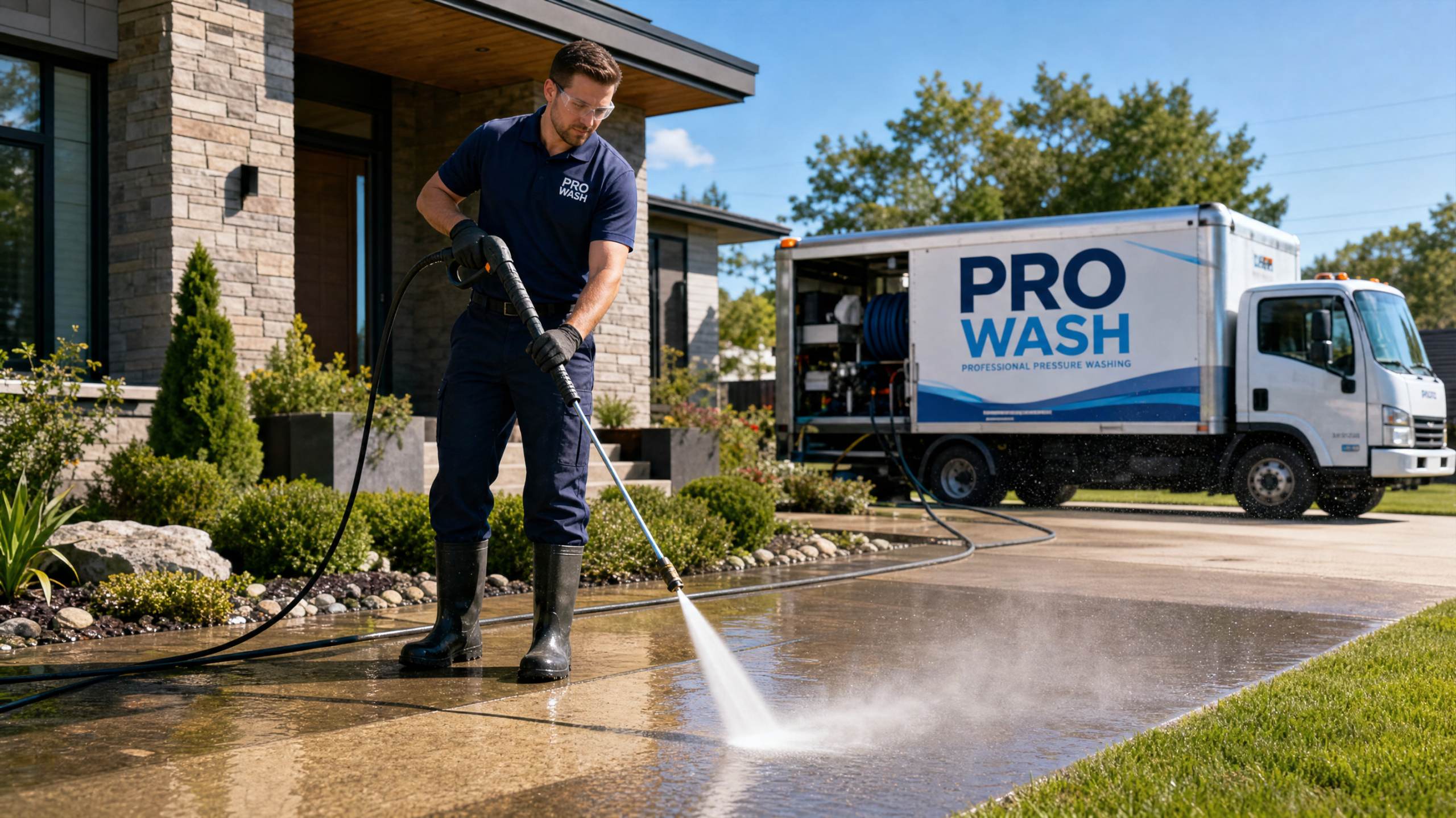
Small Business · Startup Guide
Low startup cost, fast cash flow, and a skill you can learn in a weekend, but also real competition and one regulatory trap that catches new operators off guard.
Pressure washing keeps showing up on lists of “best businesses to start with little money,” and there’s a solid reason for that. The barrier to entry is genuinely low, the work produces an instantly satisfying before-and-after that practically sells itself, and you can be cash-flow positive far faster than with most ventures. You can start part-time, on weekends, with equipment that fits in a car trunk, and scale into a real operation from there. That’s the appeal, and it’s real.
But “easy to start” is not the same as “easy to succeed,” and the same low barrier that lets you in lets everyone else in too. The operators who build something lasting treat it like an actual business, not a side gig, getting the equipment, pricing, legal setup, and crucially the environmental compliance right from the start. This guide walks the whole path: what it costs, how to set it up legally, how to price and find work, how to scale, and the wastewater rule that can land a careless operator in real trouble.
Phase 1: What it actually costs to start
The headline figure people love is “you can start for a few hundred dollars,” and technically that’s true if you already own a vehicle and buy a consumer-grade washer. But there’s a meaningful gap between a hobbyist setup and equipment that survives daily commercial use. Here’s the honest breakdown of where money goes.
| Item | Why it matters |
|---|---|
| Pressure washer (commercial-grade) | The core tool. Higher GPM matters as much as PSI for cleaning speed. |
| Surface cleaner attachment | Turns hours of flatwork into minutes; a profitability multiplier. |
| Hoses, wands, nozzles, gun | Length and quality affect reach and reliability. |
| Chemicals & detergents | Soft-wash solutions for siding, degreasers, etc. |
| Water tank (for some jobs) | Useful when a site has no water access. |
| Transport (vehicle/trailer) | Often the biggest cost if you don’t have it. |
| Business setup & insurance | Registration, liability insurance, basic branding. |
A lean but capable start might run from roughly a couple thousand dollars (consumer-leaning gear, your own vehicle) up to ten thousand or more for a serious commercial rig with a trailer, hot-water unit, and tanks. The smart move for most people is to start lean, prove you can get and keep customers, then reinvest profits into better equipment. One piece worth prioritizing early is a quality surface cleaner; it pays for itself fast by turning slow, streaky flatwork into quick, even passes.
PSI vs GPM, the thing beginners get backwards
Newcomers chase high PSI (pressure), but GPM (gallons per minute, the flow) is what actually rinses dirt away and determines how fast you finish a job. Pros value flow. More GPM means more square feet per hour, which means more money per day.
Phase 2: Set it up as a real business
Before you take a paying job, handle the boring foundational steps, because they protect you and make you look legitimate. The U.S. Small Business Administration’s 10 steps to start a business is a clean checklist, but the essentials for this trade are: register the business, decide on a structure, and get insured.
On structure, many solo operators start as a sole proprietorship for simplicity, but forming an LLC is worth strong consideration because pressure washing carries real liability, you’re blasting water at people’s property, and a single mistake (etched glass, damaged siding, water intrusion, injury) can be costly. The SBA’s guide to choosing a business structure lays out how an LLC can shield your personal assets. Pair that with general liability insurance, which clients, especially commercial ones, will often require before they’ll hire you. Insurance isn’t just protection; it’s a sales credential.
Phase 3: The wastewater rule that catches people out
This is the part almost no “start a pressure washing business” video covers properly, and it’s the one that can generate fines. When you pressure wash, the dirty runoff, full of dirt, soap, oil, mold treatment, and whatever you blasted off, has to go somewhere. The instinct is to let it flow down the gutter into the nearest storm drain. That’s often illegal.
Here’s why: storm drains typically discharge directly into local streams, rivers, and lakes with no treatment. Under the Clean Water Act and the EPA’s NPDES stormwater program, discharging pollutants into those waters without a permit is prohibited, and your wash water counts as a pollutant. Many local ordinances flatly prohibit putting anything but rainwater into storm drains, and penalties for violations can be steep. As a commercial washer, you can’t claim ignorance, and “I didn’t know” won’t help if a city inspector watches your runoff disappear into a drain.
The professional approach is to manage your wash water: block or cover storm drains during work, then capture the runoff and dispose of it properly, often by vacuuming it up and discharging to a sanitary sewer (with permission) or a landscaped area, depending on local rules. This is exactly the kind of detail that separates a real business from a guy with a wand, and getting it right is both a legal necessity and a selling point to commercial clients who care about compliance. Always check your specific local stormwater rules before you start, because requirements vary by municipality.
Phase 4: Residential, commercial, or both
Most operators start residential: driveways, sidewalks, house siding (soft washing), decks, fences, patios. The jobs are smaller, the sales cycle is short, and homeowners pay quickly. It’s the natural on-ramp. Commercial work, storefronts, parking lots, dumpster pads, fleet washing, restaurant exhaust areas, HOA common areas, pays bigger and offers recurring contracts, which is the holy grail because predictable monthly revenue beats one-off jobs. But commercial clients demand insurance, compliance, reliability, and often the wash-water management above. A common growth path is to build a residential base for cash flow, then pursue commercial contracts for stability as you professionalize.
Phase 5: Pricing without underselling yourself
New operators routinely price too low out of insecurity, then resent the work. There are three common pricing methods: by the square foot (common for flatwork like driveways and large surfaces), by the job (a flat quote for a typical house wash), and by the hour (less common, mostly for odd jobs). Whatever method, your price has to cover not just your time but fuel, chemicals, equipment wear, insurance, water, travel, and taxes, plus profit. A job that “feels like good money” can be a loss once you subtract all of that.
Research what established companies in your area charge and position near the middle, not the bottom. Racing to be the cheapest attracts the worst customers and starves your business of the margin it needs to grow. The before-and-after results are your real selling point; lean on quality and professionalism, not the lowest bid.
Phase 6: Getting customers and scaling
Early on, your best marketing is local and visual. A simple website, a Google Business Profile so you show up in local searches, and before-and-after photos on social media do a lot of heavy lifting because the results are so photogenic. Neighborhood referral is powerful in this trade: do one driveway on a street and neighbors notice. Door hangers, local groups, and partnerships with realtors or property managers all generate work.
Scaling means moving from doing every job yourself to building a system: hiring and training help, adding a second rig, locking in recurring commercial contracts, and eventually working on the business rather than in it. The ceiling is higher than people assume, plenty of operators grow from a single weekend setup into multi-truck operations, but it requires reinvesting profit, systematizing the work, and treating those unglamorous foundations (insurance, compliance, pricing) as the platform that lets you grow.
The honest downsides
It’s physical, weather-dependent work that can be seasonal in cold climates, where winter slows or stops outdoor washing. The low barrier means crowded competition, so differentiation and professionalism matter. There’s a real skill curve, using too much pressure on the wrong surface damages property, so learning soft-washing and surface-appropriate technique is essential. And like any service business, you’re trading time for money until you build systems and a team. None of these are dealbreakers; they’re just the reality behind the “easy money” pitch.
Learn soft washing, not just blasting
One of the most expensive beginner mistakes is treating every surface like it can take full pressure. It can’t. House siding, roofs, screens, and many delicate surfaces will be damaged, dented, gouged, or driven full of water, by a high-pressure blast. The professional answer is “soft washing”: using low pressure combined with cleaning solutions that do the chemical work, so the dirt, algae, and mildew release without the force. A pro knows when to switch from high-pressure for concrete flatwork to a gentle soft-wash for a roof or vinyl siding, and that judgment is part of what clients are paying for.
This matters financially as much as technically. Damaging a customer’s property is how you generate a liability claim, a bad review, and a refund all at once, and it’s why insurance and skill go together. Spend real time learning which surfaces need soft washing, what dilutions to use, and how to protect plants and landscaping from runoff. The operators who master soft washing also unlock higher-value work like house and roof cleaning, not just driveways, which broadens what you can sell.
Managing seasonality and add-on services
In much of the country, outdoor washing slows in winter, which can make cash flow lumpy if all you do is pressure wash. Smart operators plan for it: they build a backlog of commercial contracts that run year-round in milder regions, push gift cards and prepaid packages in the off-season, and add complementary services that share equipment and customers, gutter cleaning, window washing, deck and fence sealing, holiday-light installation, or paver sealing. These add-ons smooth the calendar, raise the average ticket per customer, and deepen relationships with clients you’ve already earned. A homeowner who trusts you to wash the house is an easy yes to also seal the deck. Thinking of yourself as an exterior-cleaning and maintenance business, rather than only a pressure washer, is part of how the small operators grow into year-round companies.
Bottom line
Pressure washing is one of the most accessible real businesses you can start, with low costs, fast cash flow, and a clear path to scale. The winners treat it seriously: capable equipment (prioritize GPM and a surface cleaner), an LLC and liability insurance, disciplined pricing, and proper wash-water management to stay on the right side of stormwater law. Start lean, reinvest, professionalize, and the “side gig” can become a genuine business.
Frequently asked questions
How much does it cost to start a pressure washing business?
It ranges widely. A lean start with consumer-leaning gear and your own vehicle can be a couple thousand dollars, while a serious commercial rig with a trailer, hot-water unit, and tanks can run ten thousand or more. Many operators start lean and reinvest profits into better equipment.
Do I need a license or permit?
Requirements vary by location, but you’ll generally register the business, likely want an LLC and liability insurance, and must follow local stormwater and wastewater rules. Some areas require specific permits for wash-water discharge. Check your municipality’s requirements before starting.
Can I just let the dirty water go down the storm drain?
Usually no. Storm drains often flow untreated into local waterways, and discharging wash water into them can violate the Clean Water Act and local ordinances, with real penalties. Professionals capture and properly dispose of runoff instead.
Is PSI or GPM more important?
GPM (flow) largely determines how fast you can clean and finish jobs, while PSI provides cleaning force. Beginners over-focus on PSI; experienced operators prize GPM because it drives how many square feet, and how much money, you can do per hour.
For business setup guidance see the U.S. Small Business Administration’s 10 steps to start a business and choose a business structure; for wash-water rules see the EPA’s NPDES stormwater program. Always verify local licensing and discharge regulations before operating.